BFL AI Studio
An AI-assisted e-commerce image-production platform structuring product upload, generation, review, approval and delivery in one workflow.
Role
- Product Owner
- Independent Builder
Discipline
- AI Product Development
- Creative Operations
Year
2026

01
Business context
BFL AI Studio removes the manual effort, inconsistency and coordination involved in producing e-commerce product imagery at scale. The platform brings product upload, model selection, generation, review, approval and final delivery into one structured workflow.
02
The challenge
Translate a repetitive, multi-stage creative-production problem into a controlled software workflow — without losing the quality judgement that makes e-commerce imagery usable.
03
Role & responsibilities
I conceived the product, defined the workflow, designed the user experience, structured the production logic and built the application. Stakeholder input validates operational requirements, while product definition and build ownership remain with me.
The platform is independently owned and built by me, with workflow input and validation from relevant creative, styling and operational stakeholders.
- Defined the original product concept.
- Designed user roles and permissions.
- Designed end-to-end production workflows.
- Designed interface and interaction logic.
- Connected creative requirements with application logic.
- Developed the application functionality independently.
- Built batch uploads and scheduling.
- Designed quality-control and approval stages.
- Structured production-gallery and reporting requirements.
- Coordinated creative, styling and operational expectations.
04
Strategic approach
- 01Start from the production line, not the interface — map every stage an image passes through before it is publishable.
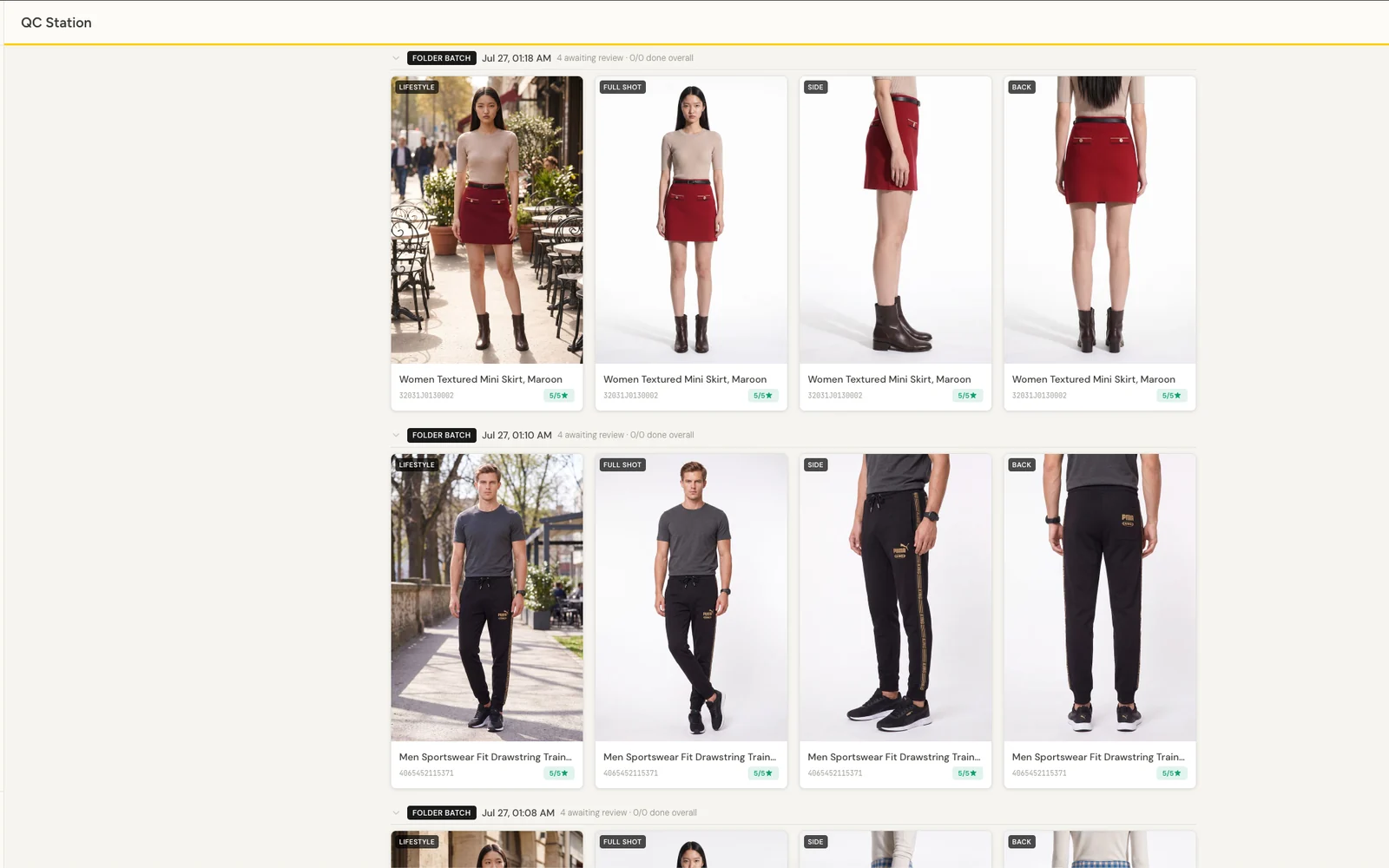
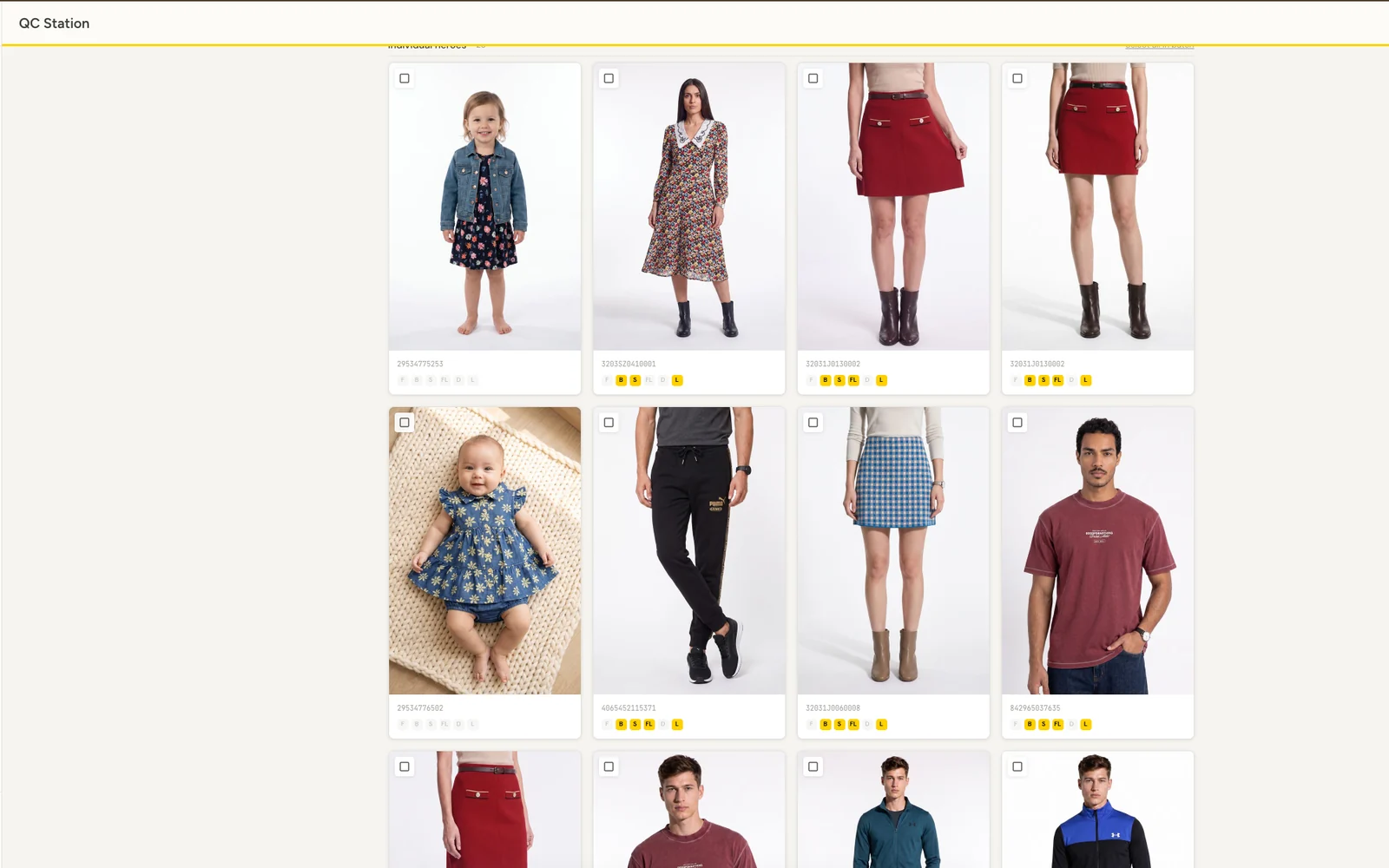
- 02Make quality a gate rather than an afterthought: confidence review, approval/rejection and stylist QC are first-class steps.
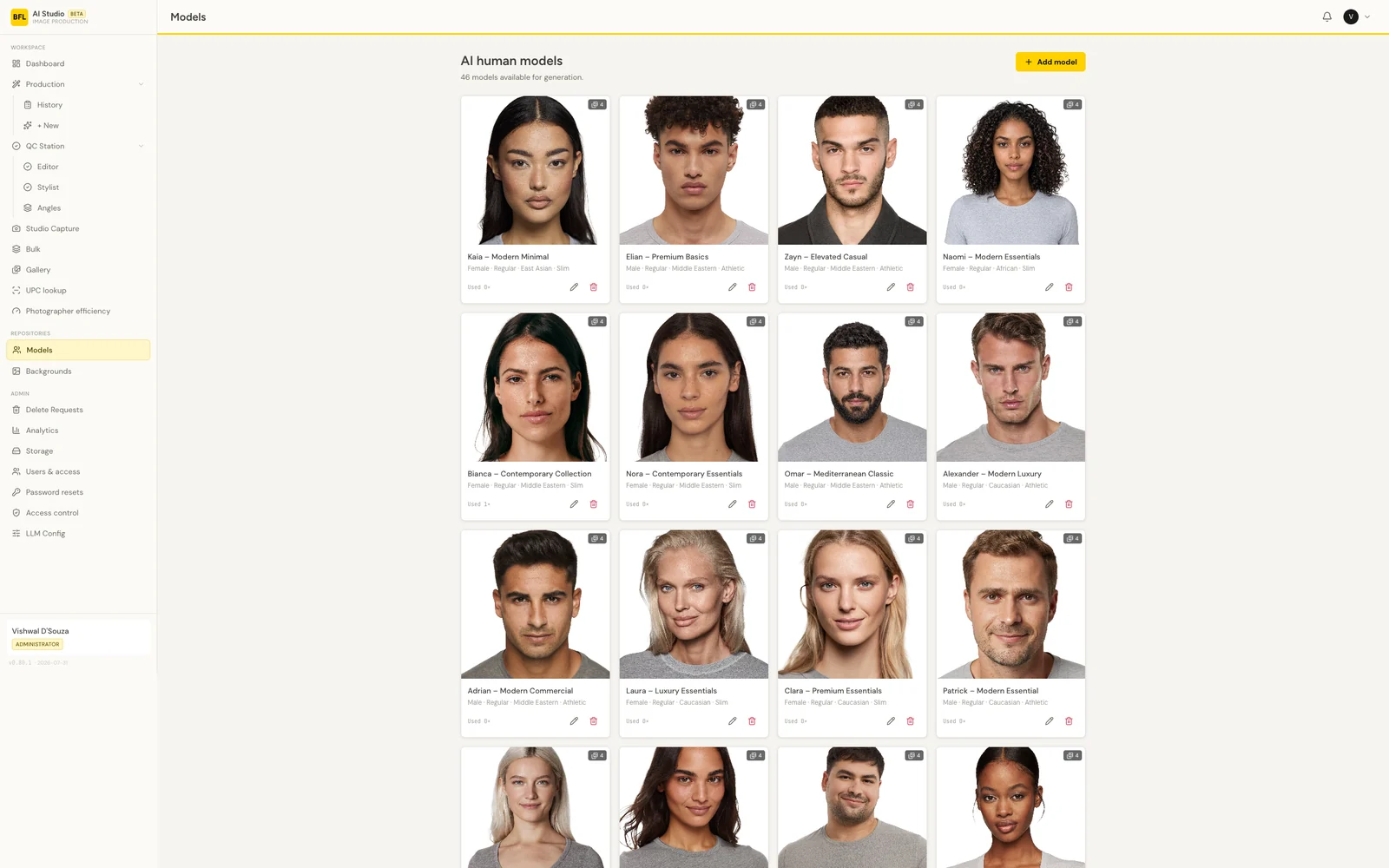
- 03Keep models and backgrounds fixed systems so output stays consistent at volume.
- 04Design for batch reality — uploads, scheduling and bulk production rather than one-off generation.
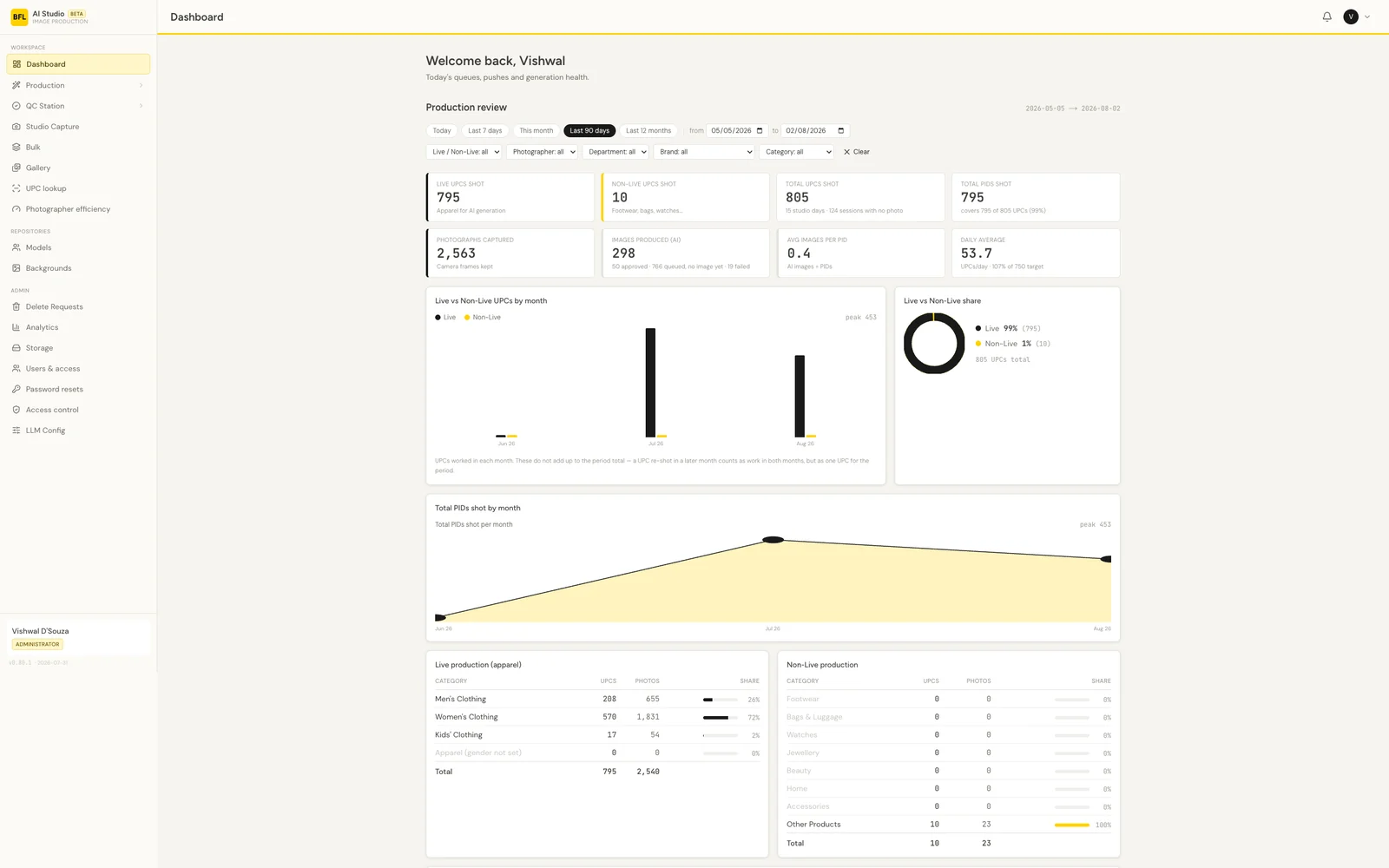
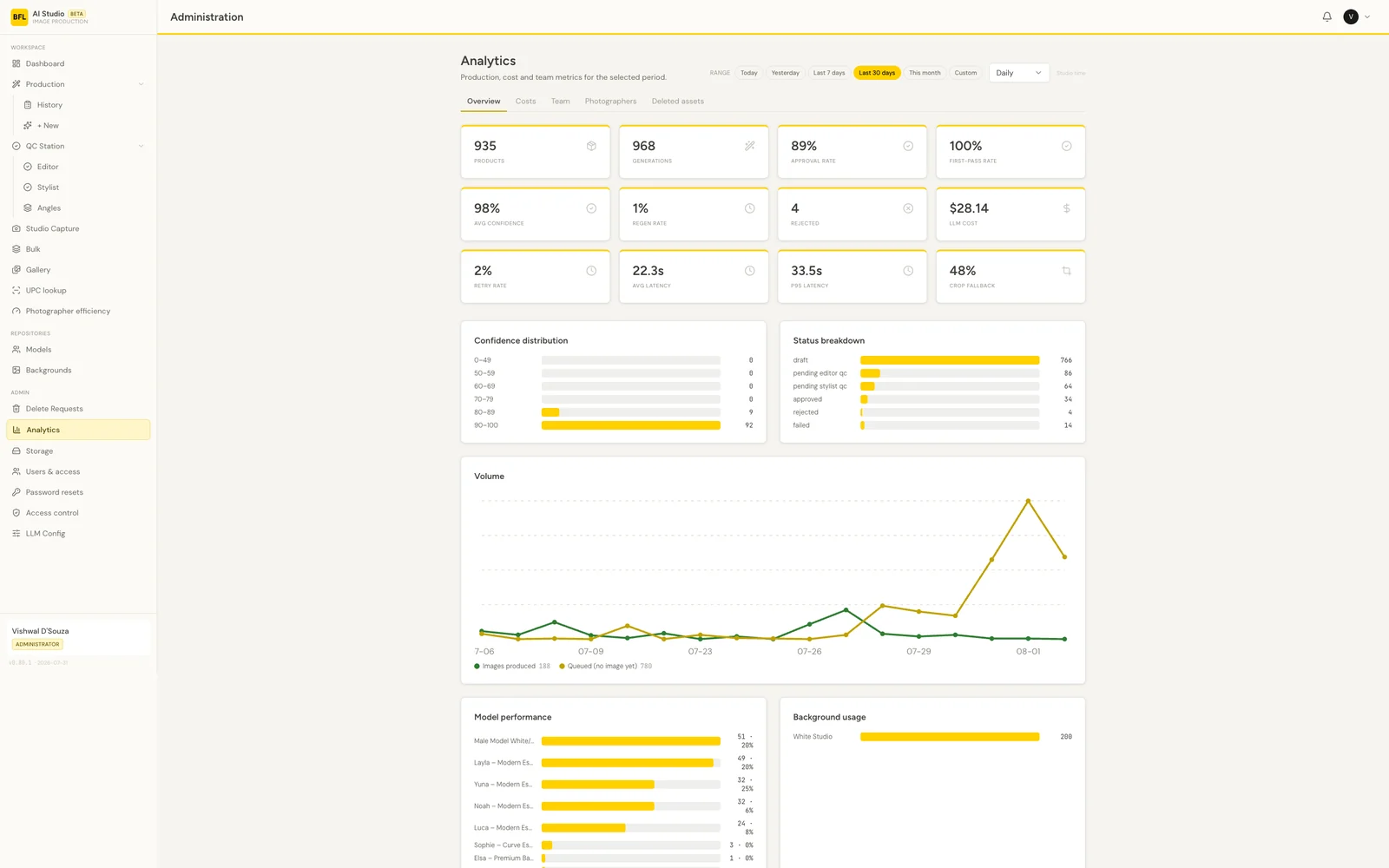
- 05Give leadership visibility: production-line status, cost and time estimation.
05
Team & stakeholders
- Product ownership and development carried independently.
- Workflow input and validation from creative, styling, e-commerce operations and production stakeholders, plus technical or security stakeholders where required.
06
Solution & capabilities
- UPC-based product records
- Batch uploads
- Fixed model and background systems
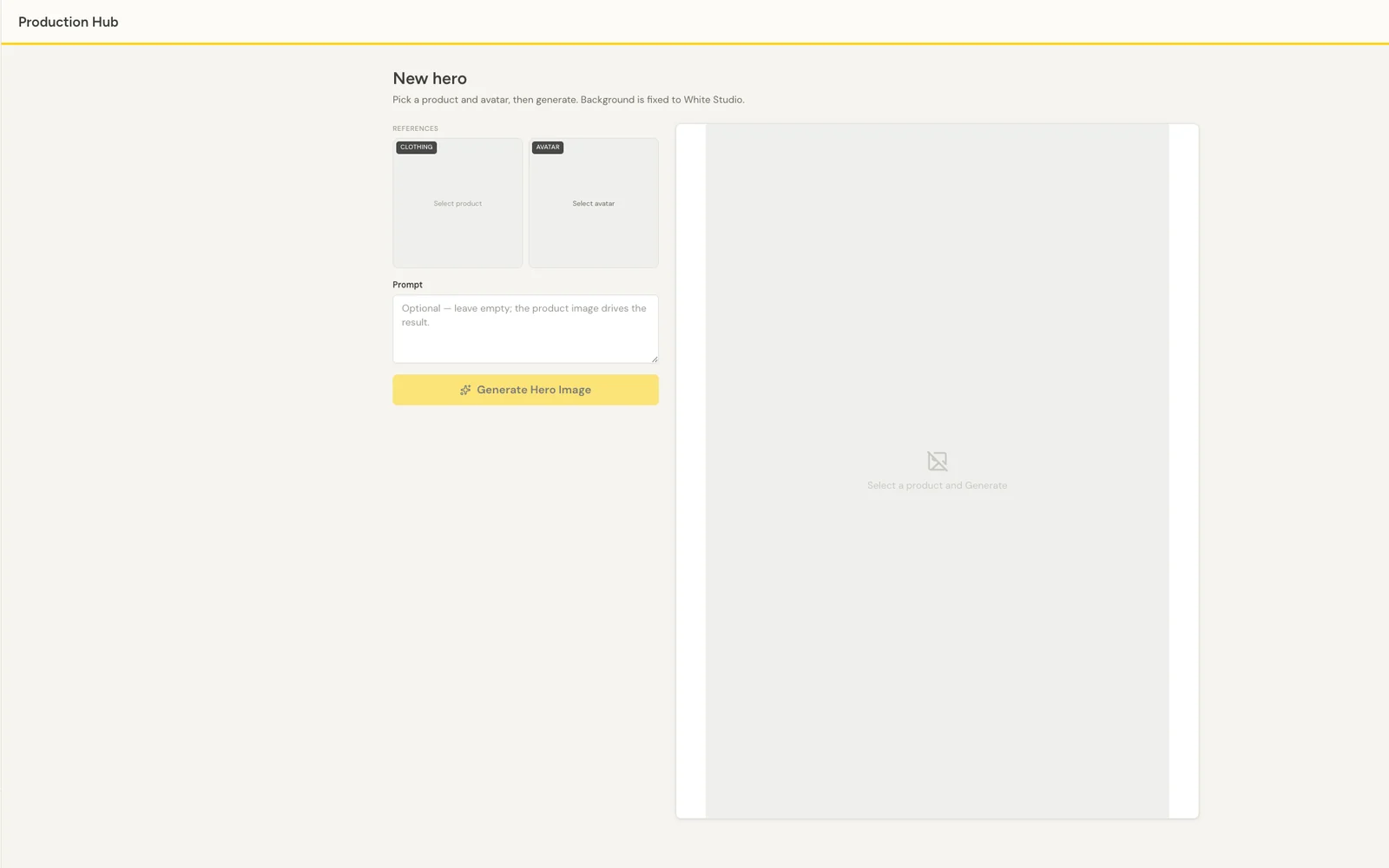
- Hero and supporting product angles
- Confidence and quality-control stages
- Approval and rejection logic
- Bulk production
- Scheduling
- Role-based access
- Production-line visibility
- Cost and time estimation
—
Technology & data
Stack
- Modern web application stack
- TypeScript-based interface
- Supabase-backed data layer
- AI image-generation workflow integrations
- Structured role and workflow logic
- Built with Antigravity, Claude Code and Codex
- ComfyUI-based generative-image workflows
07
Process & workflow
- 01Product Upload
- 02Product Record / UPC
- 03Model and Background Selection
- 04Hero Image Generation
- 05Confidence / Quality Review
- 06Approve or Reject
- 07Supporting Angle Generation
- 08Stylist Quality Control
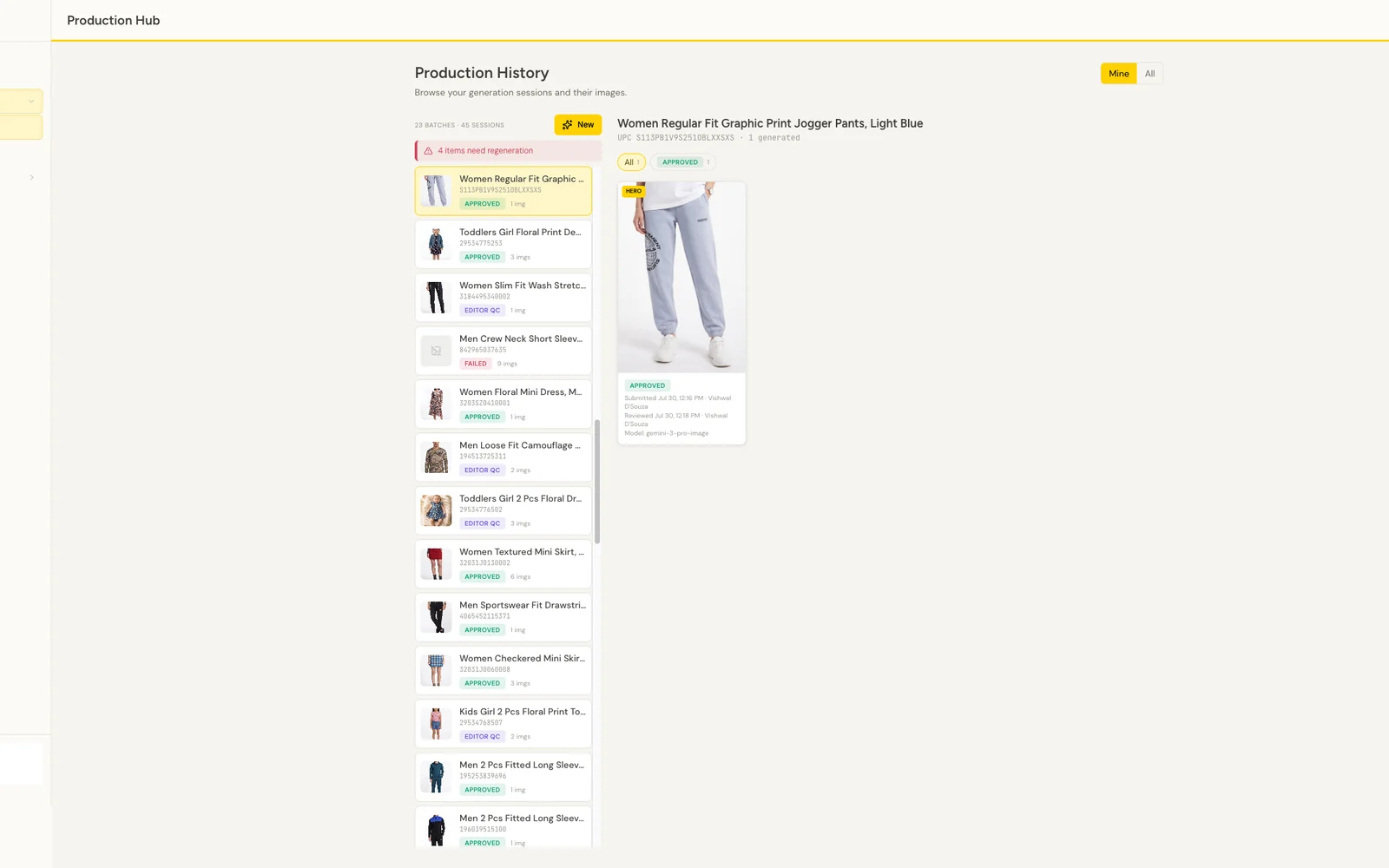
- 09Production Gallery
- 10Final Delivery
08
Outcome
- Brings product upload, generation, review, approval and delivery into a single tracked workflow instead of scattered manual coordination.
- Holds models and backgrounds as fixed systems, so imagery stays visually consistent across large product volumes.
- Treats quality as a gate rather than an afterthought: confidence review, approve/reject and stylist QC each sit in the production line.
- Handles batch reality — bulk uploads, grouped generation and scheduling rather than one-off image requests.
- Gives leadership production-line visibility, including cost and time estimation.
- Demonstrates product ownership, workflow design and the translation of creative-production problems into software systems.
09
Gallery